A few plain examples of what happens between exhibitions at Golden Hour Collective. Some are drawn from the studio's own rhythm, some are written as scenarios to show how a request usually runs. Nothing here is a client story, and no names or numbers are attached to it.
A first print, chosen off the rack
Situation: someone walks in during a quiet weekday, likes the work on the walls but is not ready for a framed canvas.
What we do: pull a few unframed artist proofs from the entrance rack, explain the difference between a proof and a numbered sheet, and let the paper be handled.
Result: a small, honest purchase that leaves room to come back for a larger piece later.
Watching an edition come off the press
Situation: a visitor wants to understand how a linocut actually gets made, not just see the finished print on a wall.
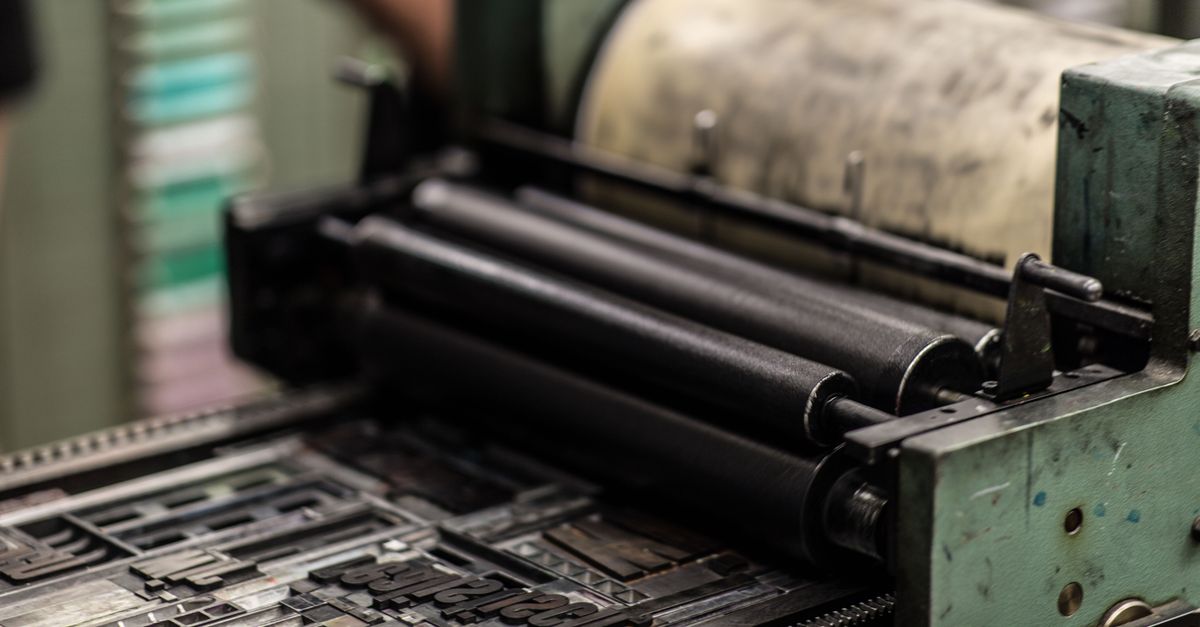
What we do: run a short pull on the 1970s platen press during an open press day, inking the block by hand and setting the sheet by corner marks.
Result: the uneven, hand-pressed surface makes sense, and the small shifts between sheets read as part of the edition.
A screenprint run that waits on the weather
Situation: a three-colour screenprint edition is planned for a week when the air stays damp and nothing cures on schedule.
What we do: hold the next layer, keep the printed sheets flat on the drying rack, and use the delay to check registration on the exposed screens.
Result: the run stays small and consistent, and any sheet that drifts is marked as a proof instead of being sold as numbered.
A quiet evening in the room
Situation: a small group needs a calm space for a book launch or a portfolio review, without a bar, a stage or a crowd.
What we do: clear the main room after a show comes down, keep the lighting low and warm, and leave the walls bare so the work being discussed stays the focus.
Result: the space does one job well, and the studio returns to printing the next morning.